How much does it cost to install an EV charger at home?

Published 3/26/2025
If you’re considering buying an electric vehicle (EV) but wondering how much it would cost to install an EV charger at home and the pros and cons of having one, keep reading!
The average cost to install an EV charger at home is between £800 and £1,500, including supply and installation.
Electric cars are becoming increasingly popular, with 1 in 6 people in the UK having one.
The cost of installing an EV charger varies depending on the complexity of the job, the charger you choose, and whether you are eligible for a government grant.
Want accurate quotes for an EV charger installation?
Post a job and local electricians will get in touch to provide a quote. It’s free, fast and no obligation.
Contents
- How much is it to install an EV charger at home?
- What factors affect the cost of EV charger installation
- What are the benefits of installing an EV charging point?
- EV charger installation cost FAQ
How much is it to install an EV charger at home?
The average cost to supply and install an EV charger at home is around £1,200, and it should take 2-3 hours.
Some EV charger providers offer standard installation with the purchase of the charger, or they may advise you on a professional local EV installer to use. If not, make sure to get quotes from qualified electricians who are familiar with installing EV charging points.
If you purchase the EV charger separately and then hire an electrician to install it, the electrician will charge around £40 per hour, depending on their location. Usually, electricians charge more in London and the south-east.
These are ballpark costs – post a job to get accurate quotes from electricians near you.
| Type | Cost |
| Electric vehicle charger (supply only) | £400 – 800 |
| Electric vehicle charger (supply & installation) | £800 – 1,500 |
| Electrician costs (labour) | £30 – 45 per hour |
| Get quotes | |
What factors affect the cost of EV charger installation
The cost of installing an EV charger at home can vary depending on many factors. Read on to learn about these factors.
Complexity of the job
How easy it is for the electrician to install the EV charger will affect the price of the installation.
For instance, if your driveway is far from your fuse box and they must run extra cabling, they will have to charge more.
If cables need to be run underground, additional groundwork or trenching will be needed, which will significantly increase the costs, anywhere between £200 and £ 1,000, depending on the complexity.
Type of EV charger
The type of EV charger you will need will depend on the make and model of electric car you have or are purchasing. You will need to check the type of connector it has and the different features it offers.
Charging speeds
Before installation, you will need to decide on the charging rate you will need for your electric car. The higher the charging rate, the more expensive it will be. Every electric car has a maximum charge rate.
- 3.6kW is the slowest charger but the least expensive to install.
- 7kW is the most common for home charging as it charges most electric vehicles in 6-8 hours, which is perfect for overnight charging. It only costs £100 – 200 more than the 3.6kW EV charger but charges twice as fast.
- 22kW is a fast charger, charging vehicles in 2-4 hours. You’ll usually find these chargers in public places rather than at home. It is possible to have one installed at home, but it requires a three-phase electrical supply, which is uncommon and can cost thousands to install.
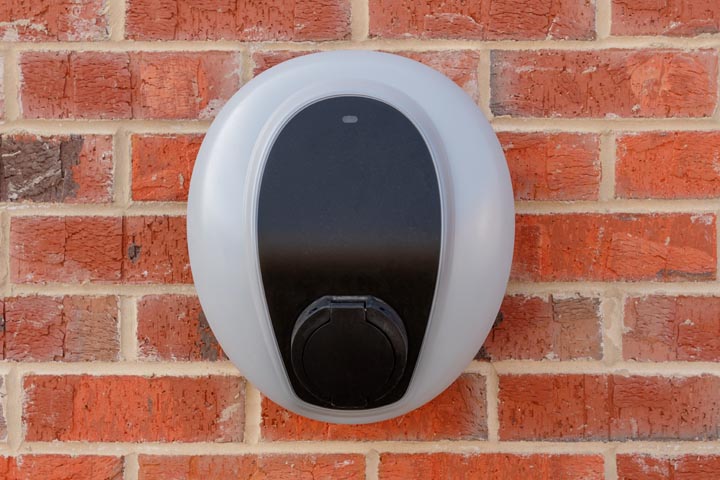
Tethered or untethered EV charger
Whether you choose a tethered or untethered EV charger will affect the cost.
Tethered EV chargers have a permanently attached cable. This is convenient, as the cable is always there, but it will be more expensive than an untethered charger.
Untethered chargers don’t have a built-in cable, making them cheaper but less convenient.
Replacement or upgrade of fuse box
You may need to replace or update your consumer unit (fuse box) depending on which electric vehicle and charger you choose. It may not have the capacity to support both your household appliances and a new EV charger.
The cost to replace a consumer unit can cost between £450 and £800.
Grant eligibility
Two grants are available for homeowners, and they can save you up to £350 off the cost of buying and installing a charger. To find out if you are eligible, click on the below links:
- Electrical vehicle chargepoint grant for households with on-street parking
- Electrical vehicle chargepoint grant for renters and flat owners
There are two other grants available to landlords who own rental properties.
What are the benefits of installing an EV charging point?
It is possible to charge your electric car using a 3-pin socket; however, not only is it extremely slow and thus uneconomical, but it can also be dangerous. Standard household sockets are not designed to take the high load needed to charge an EV. You run the risk of them overheating and causing fires.
Convenience
- You can charge your car when you choose; no need to queue at public charging station
- Fast charging
Saves money over time
- You can charge during off-peak times (i.e. at night) when electricity is the cheapest
- It is cheaper than using public charging stations
- Some electric vehicles have vehicle-to-grid technology, which allows you to sell unused electricity back to the grid.
Increases home value / appeal
As electric vehicles become more popular, potential buyers will see an EV charger already installed as a benefit.
Environmental benefits
- Charging at home reduces greenhouse gas emissions as you won’t be driving to and from public charging stations
- You can choose where your energy comes from, i.e. solar panels
EV charger installation cost FAQ
Can an electrician install an EV charging point?
Yes, if they are a registered electrician, as they need to sign off on the installations. You also want them to be familiar with installing EV chargers.
Do I need planning permission?
If you are a homeowner with private parking then you shouldn’t need to get planning permission. There are a few circumstances where you might need to ask permission from the council:
- If you live in a listed building or conservation area.
- It is a rapid charger, as these are usually higher than the restricted height of 1.6m.
- You don’t have a driveway.
You will also need to check with your landlord if you rent the property.
To get quotes from local electricians near you post a job now.
| Type | Cost |
| Electric vehicle charger (supply only) | £400 – 800 |
| Electric vehicle charger (supply & installation) | £800 – 1,500 |
| Electrician costs (labour) | £30 – 45 per hour |
| Get quotes | |